
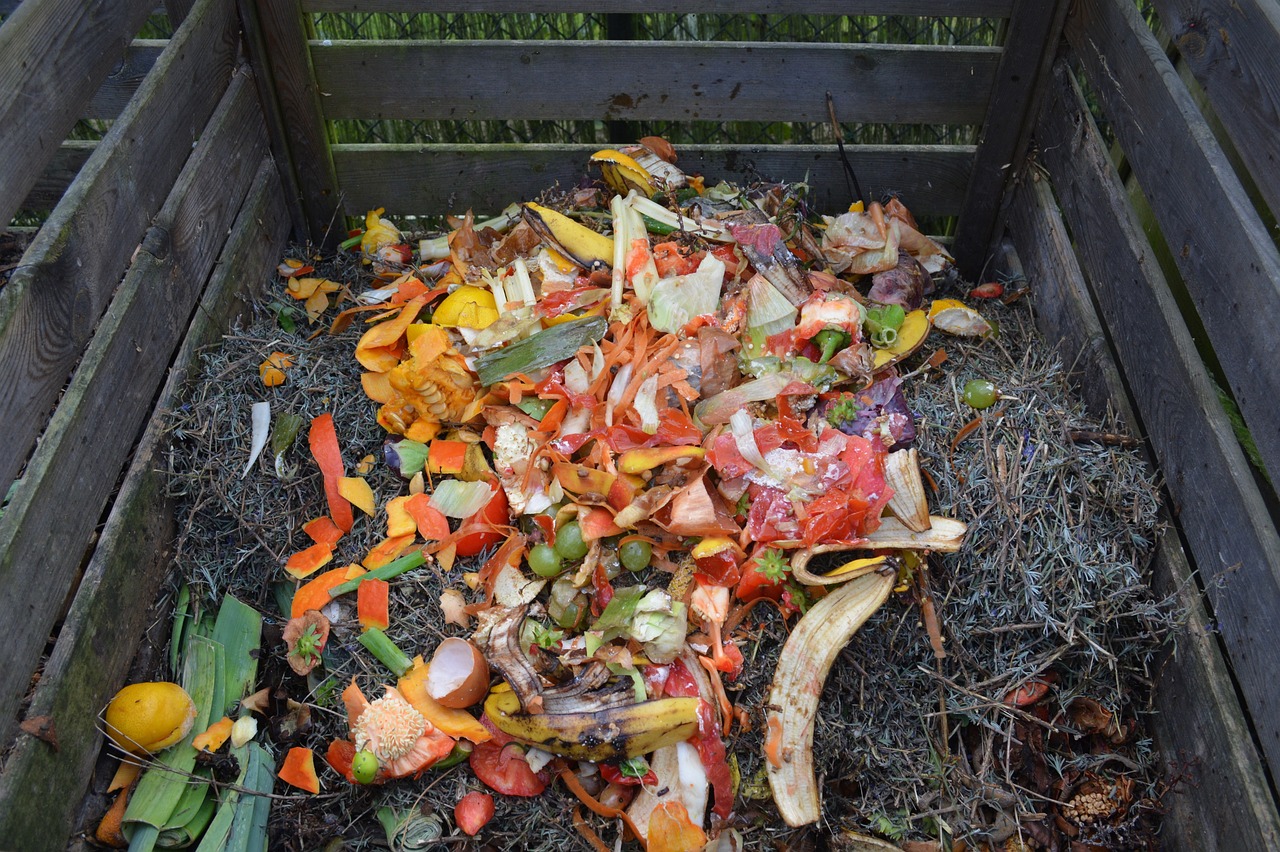
Any gardener worth their green thumb knows that composting is key to having a healthy garden. But what many millennials don’t realize is that there’s more to composting than just throwing your scraps in a pile as an effort to recycle at home and letting nature do its thing. There are four main areas that must be “controlled” during the composting process: temperature, aeration, moisture, and carbon-to-nitrogen ratio. Keep reading to learn more about each of these factors and how you can control them to create the perfect compost for your garden.
Feedstock and Nutrient Balance
 We all know that the main ingredients of compost are organic material and soil, but there’s more to it than that. The ratio between carbon-heavy materials (like leaves, wood chips, and paper) and nitrogen-rich ingredients (green grass clippings and kitchen scraps) is important for creating the right balance of nutrients in your compost. Too much carbon will make the process move too slowly, while too much nitrogen will cause it to smell bad. You can check the carbon-to-nitrogen ratio in your compost by testing its pH level – an ideal compost should have a pH of around 7.
Particle Size
The size of the particles in your compost also affects its quality. Smaller particles will decompose faster but too small, and the material won’t have enough air to aerate properly. The ideal size for your compost should be about the size of a walnut shell – this ensures that it’s not too big or too small, giving it plenty of air and ensuring that it doesn’t dry out. In fact, adding an activator like worms or fungi can help break down larger pieces and create the perfect compost.
Temperature
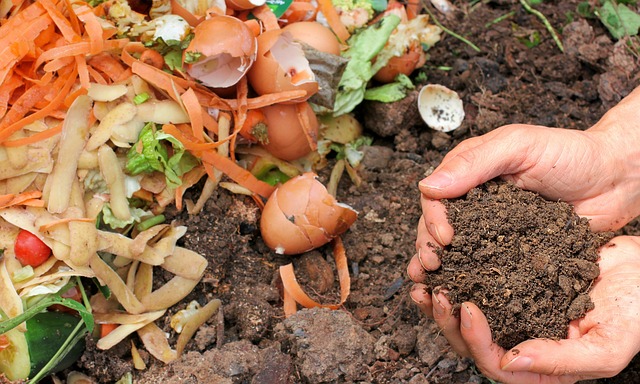
Composting is a decomposition process, and living organisms are responsible for breaking down organic material. For this to happen, the compost must be at an ideal temperature range – between 120-160 degrees Fahrenheit. Too low and decomposition will occur too slowly; too high and the material will burn. You can check your compost’s temperature with a thermometer or use an infrared gun to measure it from a distance. Be sure to turn the compost regularly and add more water if needed to maintain its temperature.
Moisture and Airflow
Last but not least, moisture and airflow are two of the most important elements for successful composting. Too much water will cause the material to become too wet and create anaerobic (lack of oxygen) conditions that can produce bad odors; too little water and the material won’t break down properly. The ideal range is between 50-60%, which can be checked with a moisture meter. Airflow is also important, as it helps to regulate the temperature, keep odors down, and encourages microorganisms to break down the material faster. This can be achieved by turning your compost regularly and keeping an eye on its particle size.
By following these guidelines and controlling each of the four main factors, you can create the perfect compost for your garden. Not only will it provide your plants with vital nutrients, but it will also help you to recycle more effectively and reduce waste – which is something we can all get behind.

 When it comes to transcription security, the first step is selecting a reliable service provider. With countless options available in the market, it can be overwhelming to choose the right one. However, there are certain factors you should consider to ensure you make an informed decision. Start by researching different transcription service providers and reading customer reviews or testimonials.
 When it comes to ensuring transcription security, one of the most crucial steps is to encrypt both transferred and stored data. Encryption adds an extra layer of protection by encoding information in a way that can only be deciphered with the correct decryption key. Transferred data refers to files or documents sent between you and your transcription service provider. To secure this data, it is essential to use encrypted file transfer methods such as Secure File Transfer Protocol (SFTP) or Virtual Private Network (VPN).


 Puppy 101 is the introductory course to puppy training. It is a six-week long course that teaches owners how to take care of their pup and what responsibilities come with having a dog. The course includes information on topics such as house training, crate training, feeding, and grooming. Your puppy will also attend a one-hour class each week during the course. This is where they will learn obedience commands such as sit, stay, come, down, and leave it. You will also be given homework to do with your pup outside of the class so that you can practice what you’ve learned.